

Erosion control in Raleigh is cheapest when it's done early. We'd rather fix a six-inch wash in an afternoon than rebuild a six-foot gully next spring, and we cover all of Wake County from Greensboro to make that easy.
The slopes around Raleigh are classic Piedmont: thin topsoil over dense Cecil clay that sheds water and cuts easily once it's bare. We see the worst erosion on Wake County lots that were cleared or graded and then left through a summer of thunderstorms without seed or mulch.
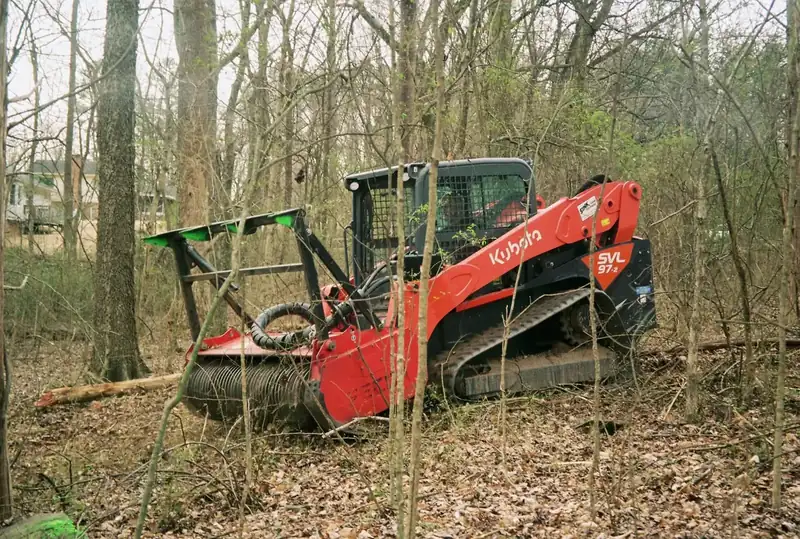
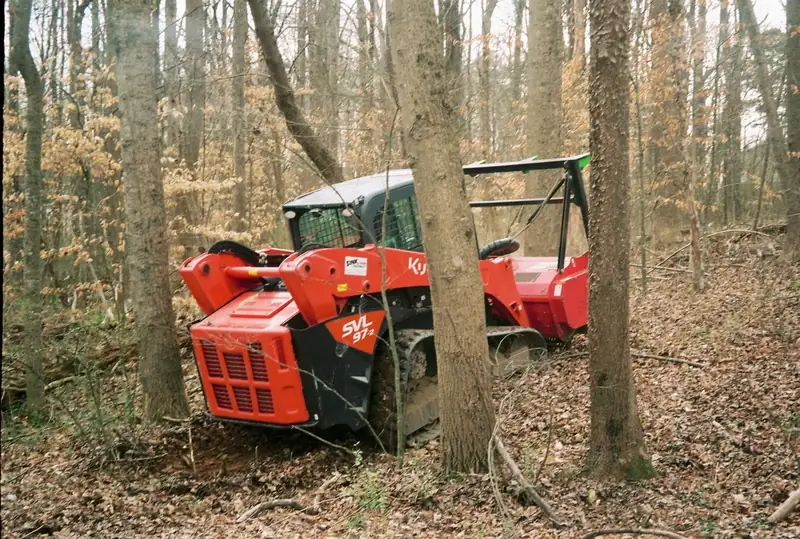
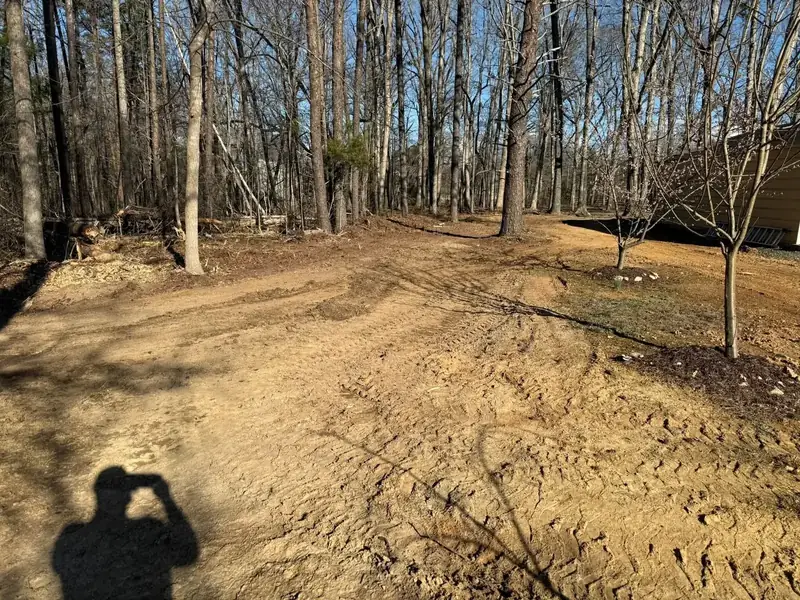
Raleigh ground conditions and how they shape erosion control
Raleigh is the far end of our service area, so we are selective and we go for real jobs. North Raleigh past Falls of Neuse Road, Leesville Road and Durant Road still has estate lots and the last wooded parcels in the big subdivisions, and owners want understory mulched, views opened and backyards reclaimed. The south and east sides along Rock Quarry Road, Poole Road and Old Stage Road toward Garner have larger wooded and former-farm tracts being cleared for infill subdivisions and commercial. Wendell, Knightdale and the US-64 corridor are close enough that we handle them on the same trip.
Around the Neuse River, Walnut Creek and William B. Umstead State Park, the properties we're usually called to look like this:
- Commercial outparcels along US-64, US-401 and US-70 needing stumps pulled and rough grading
- Wooded infill lots inside the Beltline that have grown up in privet and ivy for decades
- Neuse River and Crabtree Creek frontage with buffer-limited clearing and trail work
What erosion control jobs look like around Raleigh
One job we see over and over near William B. Umstead State Park: Commercial outparcels along US-64, US-401 and US-70 needing stumps pulled and rough grading. That's textbook erosion control work, and it's usually a one-mobilization job for us.
Out toward I-540 the pattern changes — more Freshly cleared or graded land losing topsoil. The approach is the same, the time on site is what moves.
Either way, the first question we ask on a Raleigh site walk is what the ground needs to do afterward, because that decides how far we take it.
Neighbors in Sanford, Chapel Hill and Apex call us for the same work; Raleigh sits right in the middle of that route.
Why Raleigh property owners call A&R
We treat erosion as a water problem first and a dirt problem second. Plenty of contractors will haul in fill and dump it in a gully; we figure out why the water is concentrating there and fix that too, so the repair in Wake County lasts.
Send us photos of the eroded area on your Raleigh land and we'll tell you what we think before the visit. Free estimates, honest answers, and we're only about 1 hour 20 minutes away.
Erosion Control in Raleigh: questions
Can you fix a gully in my yard or pasture?
Yes. We fill the gully with compacted fill, reshape the area so water doesn't concentrate there again, divert the runoff that caused it to a stable outlet, and cover the repair with seed and straw or mulch. If the gully is carrying a lot of water, the bottom gets lined with stone so it holds.
What areas do you work in for erosion control?
Greensboro and the whole Piedmont Triad, plus about an hour and twenty minutes in every direction — the Virginia line to the north, Mount Airy and Elkin to the west, Salisbury, Albemarle and Sanford to the south, and Durham, Chapel Hill and Raleigh to the east.
How far is A&R Land Services from Raleigh?
We're based in Greensboro, about 1 hour 20 minutes from Raleigh. Wake County is inside the radius we work every week, so there's no long-haul mobilization charge built into your estimate.
Do you handle erosion control near the Neuse River and Walnut Creek?
Yes. We work throughout Raleigh and the surrounding Wake County area, including properties around the Neuse River, Walnut Creek and William B. Umstead State Park. If you're outside the town limits, send the address and we'll confirm it's in range.
How do you approach erosion control on Raleigh ground?
Pond banks, dam faces and spillways that are slumping is the most common version of it around Raleigh. We come back after the first heavy rain to make sure the water is going where it's supposed to and touch up anything that moved. Erosion work is only done when it's been tested. Length of diversion swales, berms and terraces needed is the factor that moves the price most on Wake County jobs, and we'll walk through it with you on site.