

Building pad work in Franklinville is where we spend a lot of our time, usually working directly with a builder or a metal building dealer. We stake the footprint, strip the organics, build the fill in thin compacted lifts and hand off a pad that's where the plan says it is.
Where a geotech is involved on a Franklinville project, we schedule their density tests between lifts rather than at the end. It's easier to fix a lift that fails than to tear down a finished pad, and it keeps the builder's timeline intact.
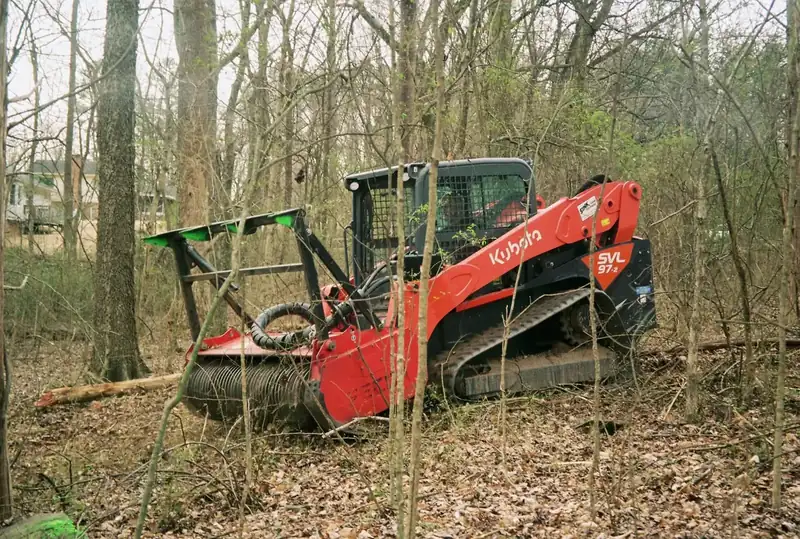
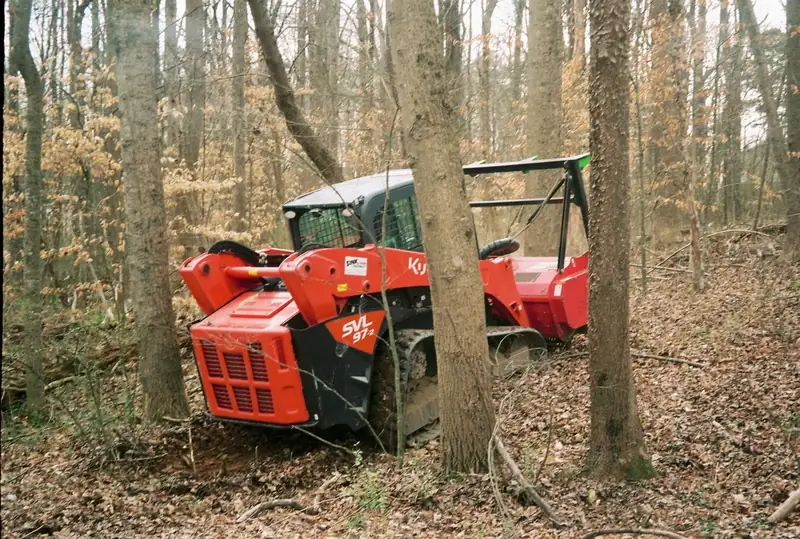
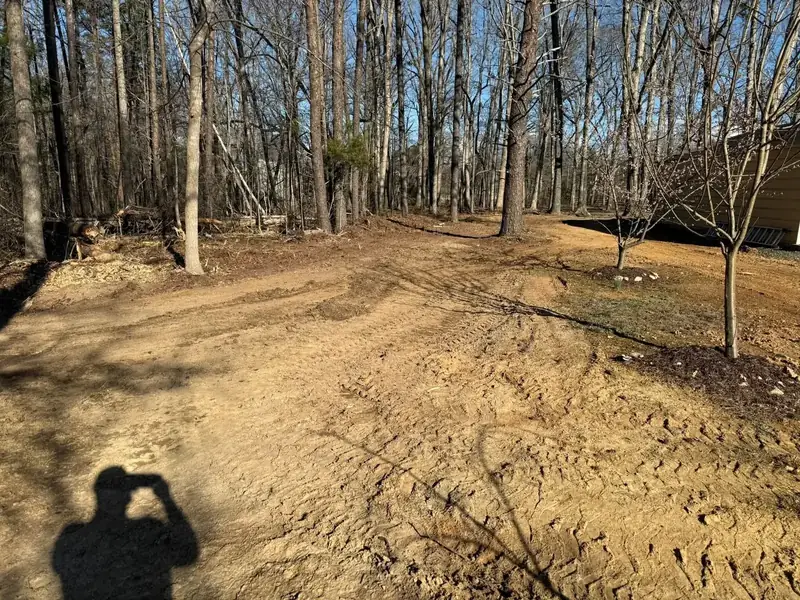
Franklinville ground conditions and how they shape building pads
Rock is the main challenge. Slate is close enough to the surface on the ridges that grubbing stumps turns into a fight, so we mulch unless a structure is going on the spot. The Cid and Nanford flats near the creek heads stay wet in winter and need warm weather. Randolph County erosion rules apply past an acre, and anything on the river bluffs gets silt fence and a buffer strip because bare slate ground washes fast. The Deep River corridor is a county priority for water quality and inspectors do come through.
Around NC-22, the Deep River Rail Trail and Sandy Creek, the properties we're usually called to look like this:
- Hunting tracts between Franklinville and Ramseur needing lanes cut and old logging roads reopened
- Old mill-village lots in town that come up for sale under decades of sweetgum and privet
- Farms on Sandy Creek Road and the Cedar Falls side needing fence lines, pasture reclamation and pole barn or poultry house pads
What building pads jobs look like around Franklinville
A typical Franklinville call for building pads looks like this: Hunting tracts between Franklinville and Ramseur needing lanes cut and old logging roads reopened. We've handled that exact situation around Sandy Creek and Cedar Falls more times than we can count.
The other common one is Modular and manufactured home pads, which usually means a tighter work area and more care around what stays.
If your property is somewhere in between, send the address and we'll tell you which side of the line it falls on.
Neighbors in Staley, Climax and Randleman call us for the same work; Franklinville sits right in the middle of that route.
Why Franklinville property owners call A&R
The pad under your Franklinville building is built by the owner. Clark is a veteran and a working firefighter, and he runs the machine, reads the plan and sets the laser himself.
Building in Franklinville? Contact A&R Land Services for a compacted, laser-leveled pad anywhere in Randolph County.
Building Pads in Franklinville: questions
Do you need a permit to build a pad?
The pad itself usually falls under your building permit, which the builder or the owner pulls through the county inspections office. If the total disturbed area on the lot goes over an acre, a state sediment and erosion control plan is required too. We'll help you figure out which applies before we start.
Do building pads need to be compacted?
Yes, and it's the whole point. Loose clay settles for years, and anything built on it moves with it. We place fill in thin lifts and compact each one with the machine as it goes down. For slabs, steel buildings and anything with an engineered foundation, your builder may require tested density, and we work to the geotech's spec and coordinate their inspections.
How far is A&R Land Services from Franklinville?
We're based in Greensboro, about 40 minutes from Franklinville. Randolph County is inside the radius we work every week, so there's no long-haul mobilization charge built into your estimate.
Do you handle building pads near NC-22 and the Deep River Rail Trail?
Yes. We work throughout Franklinville and the surrounding Randolph County area, including properties around NC-22, the Deep River Rail Trail and Sandy Creek. If you're outside the town limits, send the address and we'll confirm it's in range.
What does building pads typically involve on a Franklinville property?
Metal buildings, pole barns, workshops and detached garages is the most common version of it around Franklinville. We review the site plan, stake the footprint with working room around it, set a laser benchmark to the finished floor elevation, and work out cut and fill. Stumps, roots, rock or soft subgrade in the footprint is the factor that moves the price most on Randolph County jobs, and we'll walk through it with you on site.