
A&R clears kudzu banks, privet bottoms and bamboo stands across Davidson County with a mulcher, a grapple and a mini excavator for the roots. The Lexington property is open and mowable the same day, which is where winning against an invasive actually begins.
Bradford pear volunteers and tree-of-heaven along Davidson County fence rows are the newer problem. Both mulch, but tree-of-heaven suckers from the roots aggressively, so on Lexington properties with a bad stand we'll talk about a treatment handoff after we clear it.
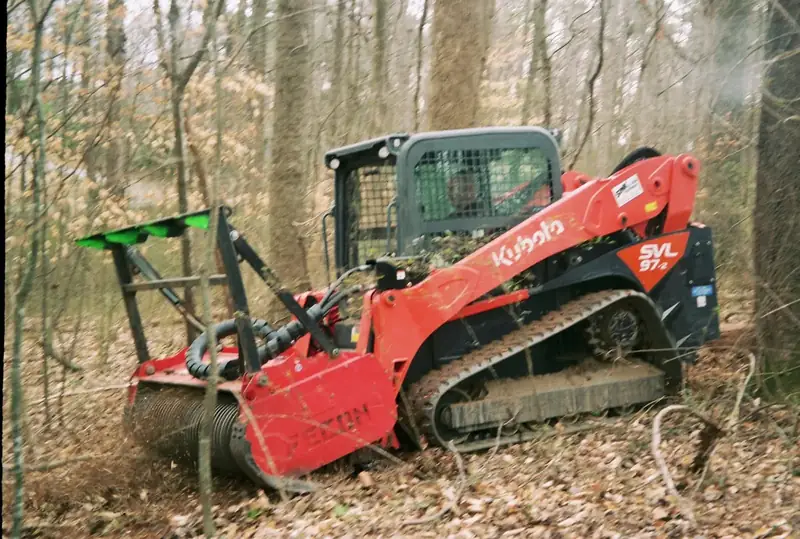
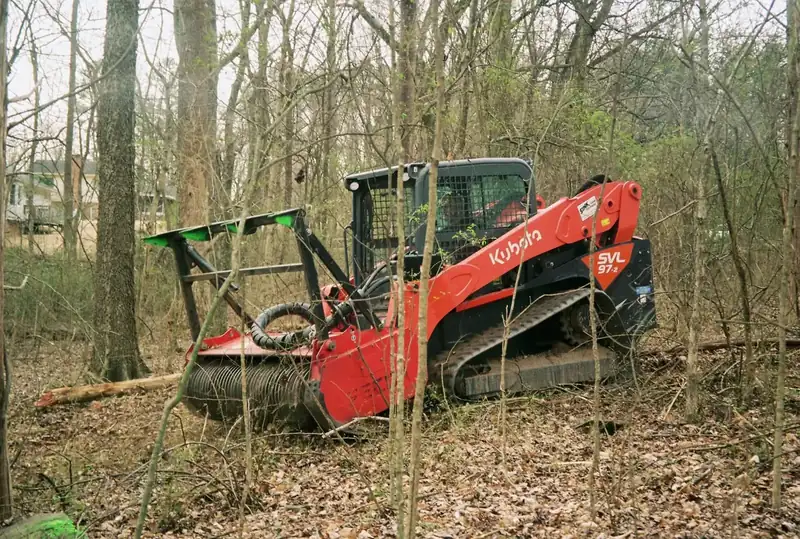
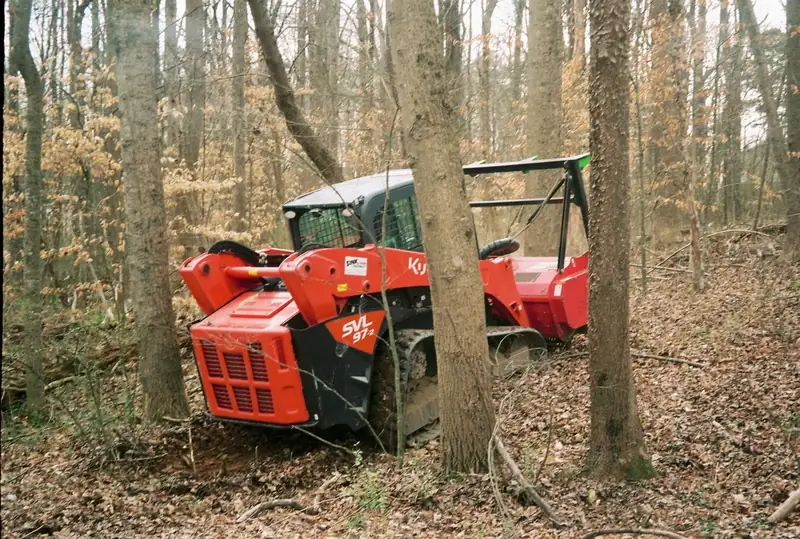
Lexington ground conditions and how they shape invasive removal
High Rock Lake drives a lot of our Lexington work. Lot owners at Southmont and along NC-8 and Cotton Grove Road want privet, sweetgum and honeysuckle cleared so they can see the water, and new buyers want pads and driveways cut on steep lake lots. The west side toward Linwood, Tyro and the Yadkin is farm country where cattle operations and old tobacco and grain farms need pasture reclaimed and fence rows found. Along I-85, US-64 and Old US-64 we clear and rough grade commercial parcels and small subdivisions, and in town we open infill lots in the older neighborhoods off Winston Road.
Around Old US-64, Tyro and Abbotts Creek, the properties we're usually called to look like this:
- Commercial parcels and small subdivisions along I-85, US-64 and Old US-64 needing clearing and rough grading
- Infill lots in the older neighborhoods off Winston Road and South Main Street
- High Rock Lake lots at Southmont and along NC-8 and Cotton Grove Road needing privet and sweetgum cleared for a view, plus pads and driveways on steep ground
What invasive removal jobs look like around Lexington
A typical Lexington call for invasive removal looks like this: Commercial parcels and small subdivisions along I-85, US-64 and Old US-64 needing clearing and rough grading. We've handled that exact situation around Abbotts Creek and Leonard Creek more times than we can count.
The other common one is Running bamboo spreading from a neighbor or an old planting, which usually means a tighter work area and more care around what stays.
If your property is somewhere in between, send the address and we'll tell you which side of the line it falls on.
Neighbors in Salisbury, Denton and Wallburg call us for the same work; Lexington sits right in the middle of that route.
Why Lexington property owners call A&R
On a Lexington invasive job you'll get the honest version from the owner. Clark is a veteran and a working firefighter, and he'd rather tell you privet comes back and plan for it than sell you a one-pass miracle.
Get the privet, kudzu or bamboo off your Lexington property. Reach out to A&R Land Services — free estimates anywhere in Davidson County.
Invasive Removal in Lexington: questions
How much does it cost to remove privet or kudzu?
Mulching a privet or kudzu infestation costs about what brush clearing does for the same acreage — it's fast work for the machine. Pulling the root crowns, digging bamboo, or committing to follow-up visits adds to it. The single biggest cost factor is whether you want it knocked back or want it gone, and we'll price both so you can choose. Estimates are free.
Can kudzu be removed permanently?
Yes, with persistence. Mulching strips the vine mass, and then the crowns have to be exhausted — either by mowing every few weeks through two or three growing seasons, or by a licensed applicator treating them. We do the mechanical part and leave the crowns easy to find. Kudzu that gets one pass and then gets ignored is back the next year.
How far is A&R Land Services from Lexington?
We're based in Greensboro, about 45 minutes from Lexington. Davidson County is inside the radius we work every week, so there's no long-haul mobilization charge built into your estimate.
Do you handle invasive removal near Old US-64 and Tyro?
Yes. We work throughout Lexington and the surrounding Davidson County area, including properties around Old US-64, Tyro and Abbotts Creek. If you're outside the town limits, send the address and we'll confirm it's in range.
How do you approach invasive removal on Lexington ground?
Vines pulling down keeper trees and fences is the most common version of it around Lexington. We walk the infestation, figure out what's growing and how far the roots reach, find the keeper trees being smothered, and note creek buffers, fence lines and the neighbor's side. Different plants get different plans. Whether roots are being pulled or left for a follow-up plan is the factor that moves the price most on Davidson County jobs, and we'll walk through it with you on site.