
Every grown-up lot in Sanford has privet in it, and the longer it sits the less of anything else survives. We take the infestation down, strip the vines off the trees worth keeping, and come back when the resprouts are small if you want us to.
Chinese privet is the number one invasive on Sanford property — it fills every creek bottom and wood edge in Lee County and spreads by bird-carried seed. Mulching it is quick; keeping it down is a mowing or treatment plan for the next year or two, and we'll lay that out.
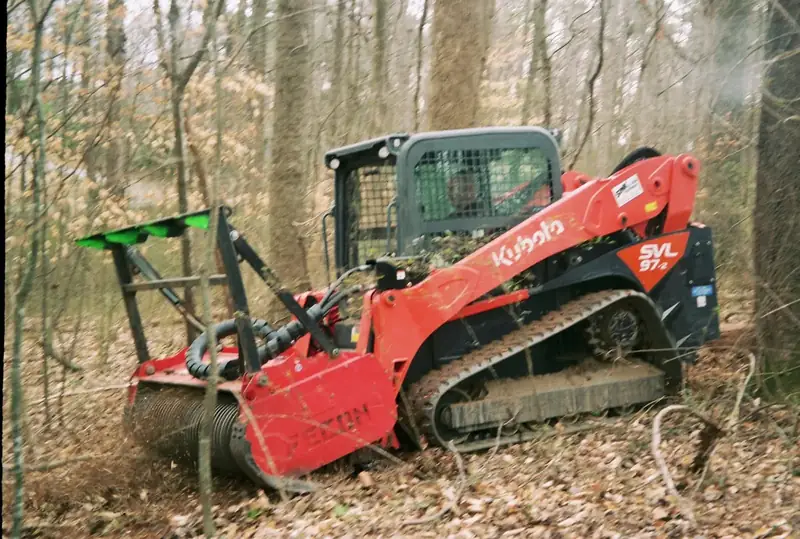
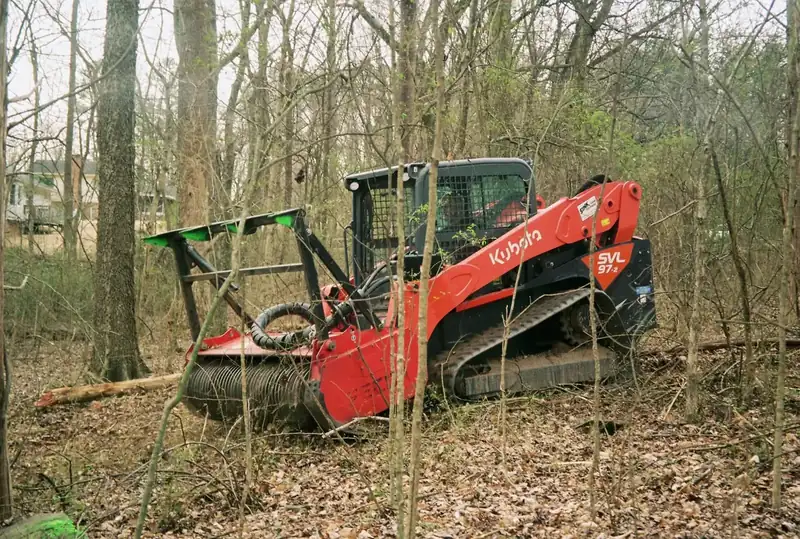
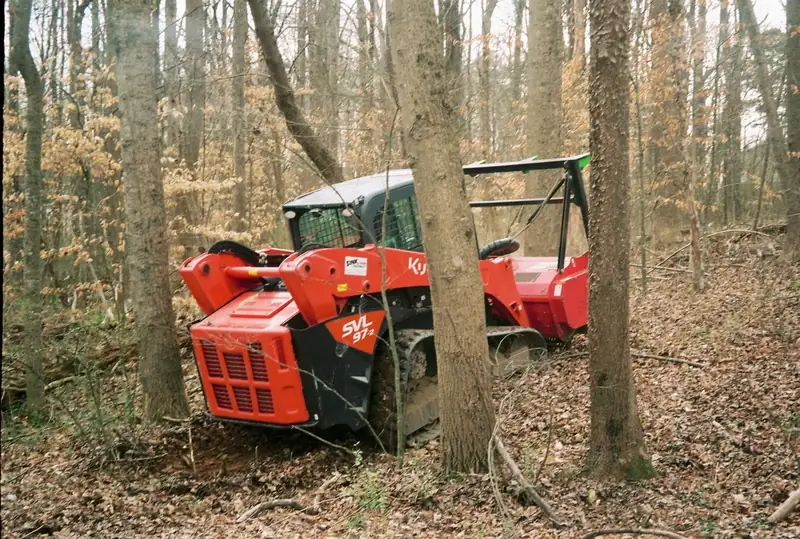
Sanford ground conditions and how they shape invasive removal
Lee County runs the state one-acre erosion threshold and there's watershed protection along the Cape Fear and Deep River. On the ground, the Triassic clay side gets grading only in dry windows and mulching with the head held high so the shale isn't torn up; the sandy side can be worked in the rain but needs erosion control because it washes; the slate side is firm but rocky. Knowing which parcel is which before we quote saves everyone a bad week.
Around Tramway, Broadway and US-421 bypass, the properties we're usually called to look like this:
- Mobile home and modular sites on rural lots needing a pad, septic area and gravel drive
- Deep River and Cape Fear hunting and recreation tracts needing trails, firebreaks and a camp site
- Builder lots around Tramway, Carolina Trace and the US-421 bypass needing lot clearing and pad prep
What invasive removal jobs look like around Sanford
Around US-421 bypass, the properties that call us for invasive removal tend to be mobile home and modular sites on rural lots needing a pad, septic area and gravel drive.
Closer to NC-87 it's more often privet thickets choking wooded lots and creek bottoms — different layout, same machine, and the estimate reflects the difference honestly.
Sanford isn't one kind of ground, and we don't price it like it is.
Pittsboro, Liberty and Cary are in the same loop as Sanford for us — same crew, same pricing basis.
Why Sanford property owners call A&R
We scope invasive removal in Sanford by the plant, not by the acre. The estimate says what mulching does for your specific infestation, what the follow-up looks like, and whether root work is included or a separate step.
For invasive species removal in Sanford, call (336) 392-8138. The owner walks it, scopes it and runs the mulcher.
Invasive Removal in Sanford: questions
Do you spray herbicide?
No. We're a mechanical operation — mulching, grapple, excavator. If your plan calls for treatment, that's a licensed applicator, and the cleanest handoff is a mulched site where the resprouts are small and visible. We'll tell you when treatment is the right next step for your plant.
What areas do you cover for invasive removal?
Greensboro and roughly an hour and twenty minutes in every direction — the whole Triad, north to the Virginia line, west to Mount Airy and Elkin, south to Salisbury, Albemarle and Sanford, and east to Durham, Chapel Hill and Raleigh.
How far is A&R Land Services from Sanford?
We're based in Greensboro, about 1 hour from Sanford. Lee County is inside the radius we work every week, so there's no long-haul mobilization charge built into your estimate.
Do you handle invasive removal near Tramway and Broadway?
Yes. We work throughout Sanford and the surrounding Lee County area, including properties around Tramway, Broadway and US-421 bypass. If you're outside the town limits, send the address and we'll confirm it's in range.
What does invasive removal typically involve on a Sanford property?
Honeysuckle and multiflora rose in old pasture edges is the most common version of it around Sanford. A written estimate that says what mulching will do, what it won't, and what the follow-up looks like for your specific plant. If bamboo or tree-of-heaven needs root work, it's in the scope or flagged as a separate step. Access to the infestation — bottoms and banks are often the hardest to reach is the factor that moves the price most on Lee County jobs, and we'll walk through it with you on site.