

Invasive removal in Siler City starts with naming the plant. Privet, honeysuckle and kudzu mulch fast and need follow-up. Bamboo and tree-of-heaven need root work. We walk it, identify it and scope it accordingly — no promises that one pass finishes a plant that doesn't work that way.
Creek bottoms in Siler City are where privet and honeysuckle are thickest, and they come with buffer rules. We clear from the top down, keep the mulch layer on the bank, and stay out of the channel. The buffer is still cleared of invasives — just carefully.
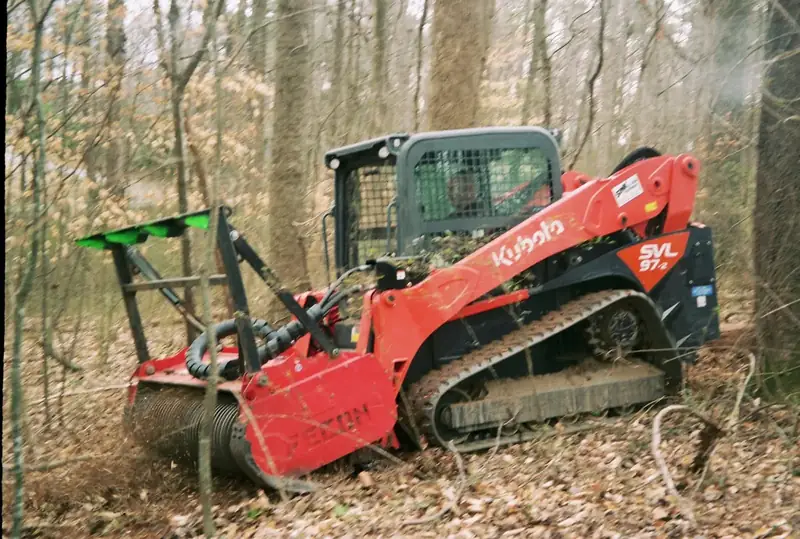
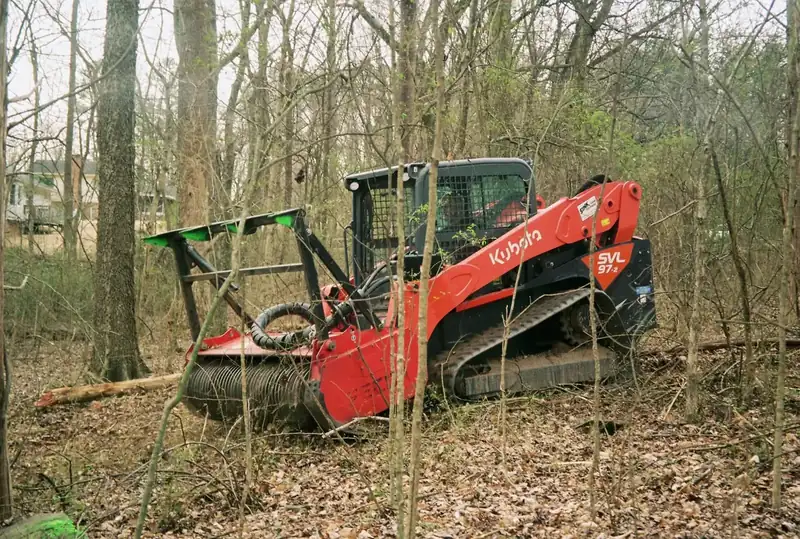
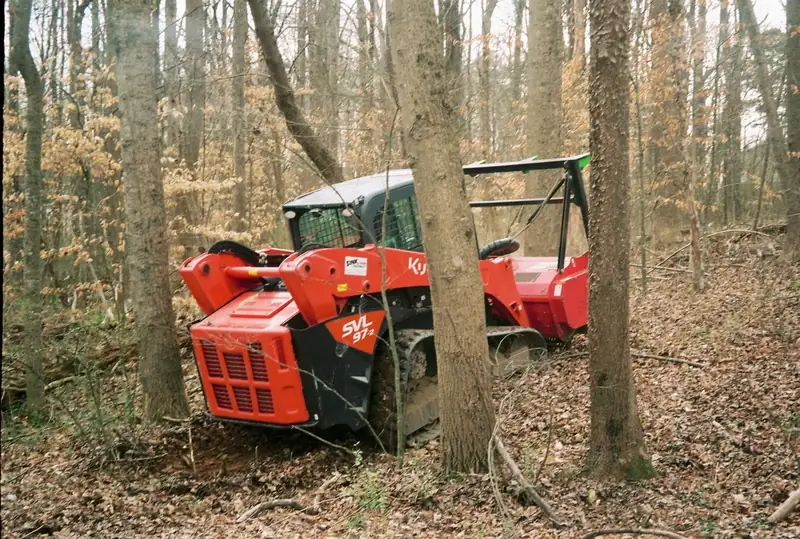
Siler City ground conditions and how they shape invasive removal
Since the Wolfspeed and VinFast announcements, western Chatham has been under heavy development pressure. The megasite along US-421 at Moncure has pulled contractor yards, worker housing and new subdivisions toward Siler City, and we've picked up a lot of commercial clearing and rough grading on parcels along US-64, US-421 and the Siler City bypass that were chicken-house and cattle land five years ago. The rural work hasn't gone away either — reclaiming overgrown pasture around Bonlee, Bennett and Goldston is steady year-round.
Around Loves Creek, the CAM megasite at Moncure and Alston Bridge Road, the properties we're usually called to look like this:
- Former poultry and cattle farms along US-64 and US-421 being graded for contractor yards, storage and new housing
- Old homeplaces with collapsed outbuildings and a half-acre of privet to clear before a sale
- Twenty- to one-hundred-acre pasture tracts around Bonlee, Bennett and Goldston reclaimed from cedar and pine
What invasive removal jobs look like around Siler City
A typical Siler City call for invasive removal looks like this: Former poultry and cattle farms along US-64 and US-421 being graded for contractor yards, storage and new housing. We've handled that exact situation around Alston Bridge Road and Bonlee more times than we can count.
The other common one is Vines pulling down keeper trees and fences, which usually means a tighter work area and more care around what stays.
If your property is somewhere in between, send the address and we'll tell you which side of the line it falls on.
If you're just outside Siler City — Liberty, Seagrove, Staley or anywhere between — you're still inside our regular range.
Why Siler City property owners call A&R
If the infestation has pulled down a fence, smothered a keeper tree or hidden a drainage problem, we handle those on the same Chatham County trip. One contractor for the clearing and what it uncovers.
Call or text (336) 392-8138 for a free invasive removal estimate in Siler City. We'll walk the infestation, name the plant and give you the real plan.
Invasive Removal in Siler City: questions
Will mulching kill privet?
No, and anybody who tells you otherwise is selling something. Mulching takes the privet to the ground and the mulch layer suppresses it for a season, but it resprouts from the root crown. What mulching does is make the infestation manageable — small resprouts you can mow, treat or pull instead of a ten-foot wall. Follow-up is part of the plan.
Do you spray herbicide?
No. We're a mechanical operation — mulching, grapple, excavator. If your plan calls for treatment, that's a licensed applicator, and the cleanest handoff is a mulched site where the resprouts are small and visible. We'll tell you when treatment is the right next step for your plant.
How far is A&R Land Services from Siler City?
We're based in Greensboro, about 50 minutes from Siler City. Chatham County is inside the radius we work every week, so there's no long-haul mobilization charge built into your estimate.
Do you handle invasive removal near Loves Creek and the CAM megasite at Moncure?
Yes. We work throughout Siler City and the surrounding Chatham County area, including properties around Loves Creek, the CAM megasite at Moncure and Alston Bridge Road. If you're outside the town limits, send the address and we'll confirm it's in range.
How do you approach invasive removal on Siler City ground?
Privet thickets choking wooded lots and creek bottoms is the most common version of it around Siler City. We walk the infestation, figure out what's growing and how far the roots reach, find the keeper trees being smothered, and note creek buffers, fence lines and the neighbor's side. Different plants get different plans. Slope and creek buffer limits on where the machine can run is the factor that moves the price most on Chatham County jobs, and we'll walk through it with you on site.