
If your Gibsonville property has good deer and bad visibility, we'll fix the visibility. Veteran and fireman owned, based in Greensboro, and run by a man who hunts and knows the difference between clearing that looks good and clearing that puts a buck in front of the stand.
Most hunting land in Guilford / Alamance County has a creek running through it, and that's where the deer travel. We route access trails to cross where the banks are low and keep the lanes along the creek edge narrow enough that the deer still use it.
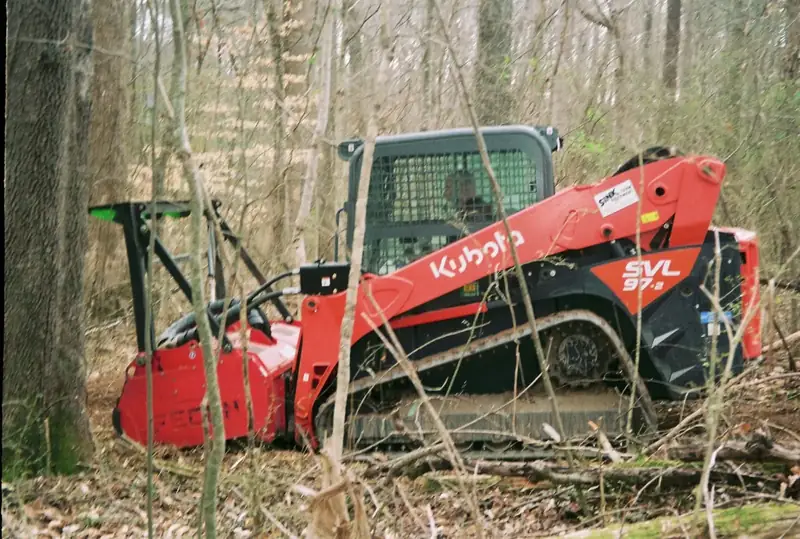
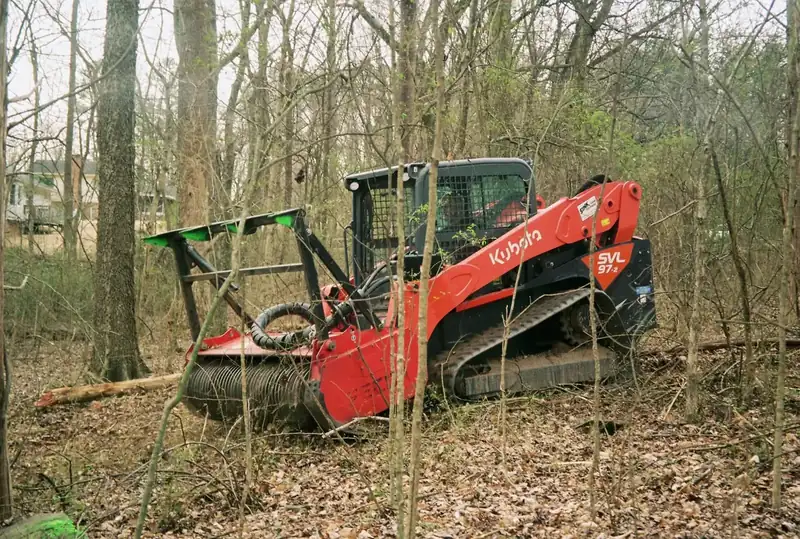
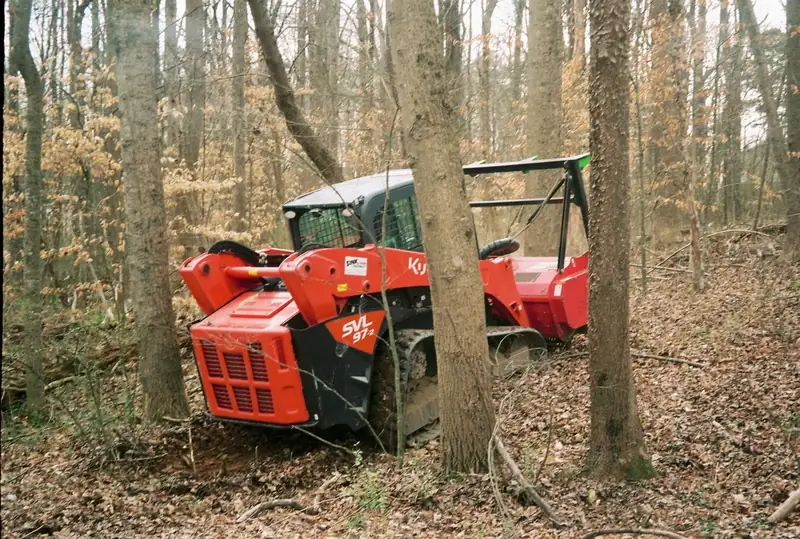
Gibsonville ground conditions and how they shape hunting land prep
On Iredell ground we'll tell you straight: don't grade it wet. It turns to grease, ruts three feet deep and sets like concrete when it dries. We wait for a solid dry week and we use a track machine. Drainage work is a bigger share of the job here than in most towns — French drains, swales and ditch cleaning to get water off the flat clay and moving toward the creek. Since the town spans two counties, we check which erosion control office has jurisdiction before we start anything over an acre.
Around Burlington Road (US-70), Travis Creek and Lake Mackintosh (south), the properties we're usually called to look like this:
- Fence-line and hedgerow clearing on the Alamance side where honeysuckle has buried the wire
- One- to two-acre build lots on the Guilford side where subdivisions are pushing out from McLeansville and Whitsett
- Flat Iredell clay pastures that need ditching and drainage before the owner can run equipment on them
What hunting land prep jobs look like around Gibsonville
Most of our hunting land prep work in Gibsonville comes from two directions. First, fence-line and hedgerow clearing on the Alamance side where honeysuckle has buried the wire. Second, edge and bedding cover work on managed tracts.
Both show up regularly along Lake Mackintosh (south) and Burlington Avenue, and both are jobs we can usually walk, quote and schedule inside a couple of weeks.
Neighbors in Mcleansville, Greensboro and Elon call us for the same work; Gibsonville sits right in the middle of that route.
Why Gibsonville property owners call A&R
Mulched lanes and trails on a Gibsonville tract are quiet underfoot and clean to the eye. No brush windrows for the deer to skirt, no bare clay to wash into the creek, no burn pile smell lingering where you hunt.
Hunting land prep in Guilford / Alamance County starts with a walk through the tract. Get in touch — late winter books up.
Hunting Land Prep in Gibsonville: questions
How wide should a shooting lane be?
For a rifle stand overlooking a bottom or an edge, eight to twelve feet gives you a clean view without turning the lane into a highway the deer avoid. For a bow stand it's smaller windows — a few feet at twenty to thirty yards. We cut from the seat's perspective and check each lane from the stand before we leave.
When is the best time to cut shooting lanes in NC?
Late winter through spring, after the season closes. The lanes have months to blend in before opening day, the deer aren't being pressured, and you can see the ground to lay them out. If you want a fresh trim before the season, early September is the latest we'd suggest — any closer to opening and you're putting fresh disturbance right where you'll be hunting.
How far is A&R Land Services from Gibsonville?
We're based in Greensboro, about 20 minutes from Gibsonville. Guilford / Alamance County is inside the radius we work every week, so there's no long-haul mobilization charge built into your estimate.
Do you handle hunting land prep near Burlington Road (US-70) and Travis Creek?
Yes. We work throughout Gibsonville and the surrounding Guilford / Alamance County area, including properties around Burlington Road (US-70), Travis Creek and Lake Mackintosh (south). If you're outside the town limits, send the address and we'll confirm it's in range.
What does hunting land prep typically involve on a Gibsonville property?
Deer hunting tracts that have grown into solid pine or sweetgum is the most common version of it around Gibsonville. A written scope and price by the job, with a schedule that works with the hunting calendar — late winter and spring for most work, early fall for a final lane trim if you want it. Edge and bedding work beyond the lanes and plots is the factor that moves the price most on Guilford / Alamance County jobs, and we'll walk through it with you on site.