
Commercial land clearing is a different animal from a homesite. There's a site plan with a disturbance limit, an erosion control plan the county has to approve, a general contractor with a schedule, and usually a silt fence and a construction entrance that have to be in before the first tree comes down. The work itself — mulching, felling, stumping, rough grading — is what we do every day. What changes is the sequencing, the documentation and the number of people who need to know what's happening.
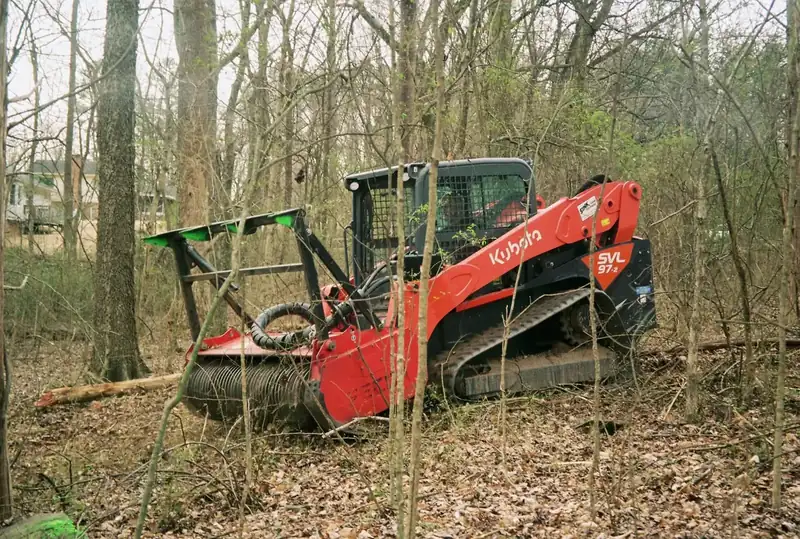
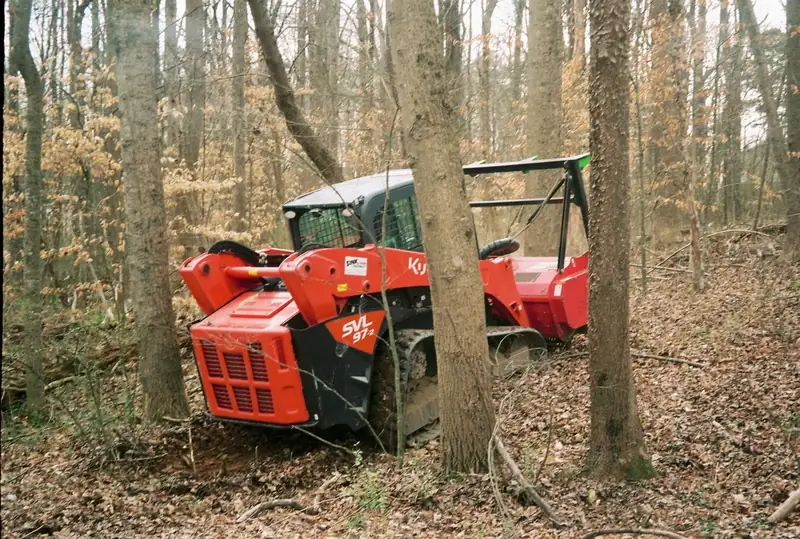
We handle the small-to-mid commercial sites that are too big for a landscaper and too small for a sitework outfit that wants a twenty-acre job: outparcels along a highway, church and daycare sites, contractor shop lots, self-storage pads, small subdivision entrances, farm and ag buildings, and the clearing phase ahead of a civil contractor. Compact track machines and a mini excavator are the right size for those sites — fast to mobilize, easy on neighboring property, and able to work in the footprint without flattening the buffer.
Clark runs the equipment himself. He's a veteran and a working firefighter, and he's used to working inside somebody else's plan and chain of command. He shows up when the schedule says, works to the limits on the drawing, and communicates with the GC and the inspector without being asked twice. Walk-throughs and estimates are free.
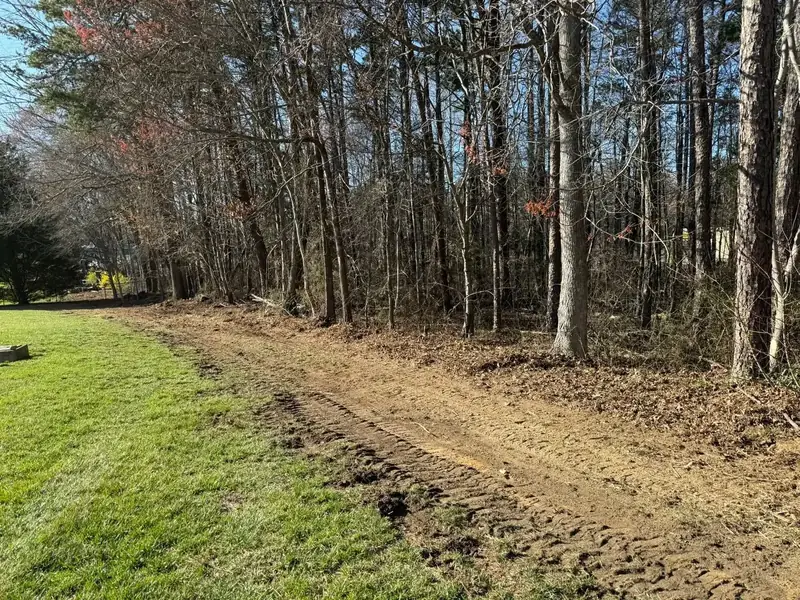
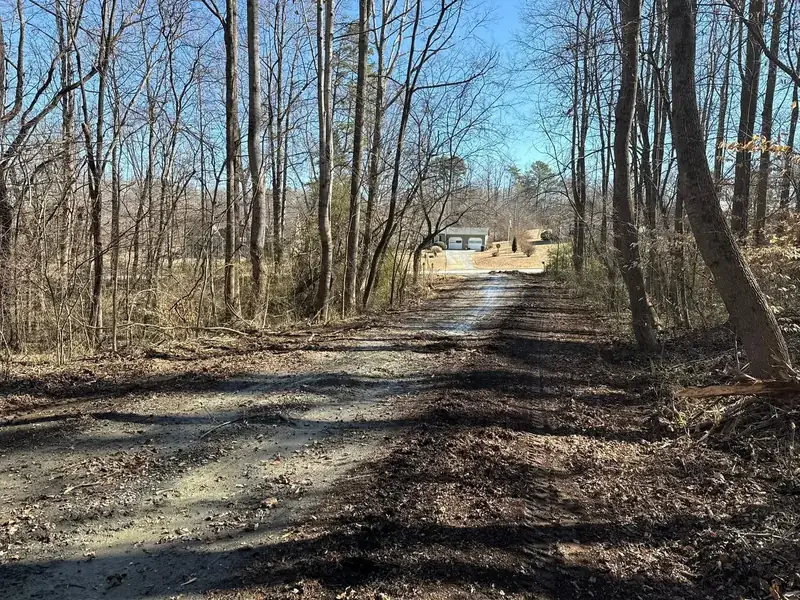
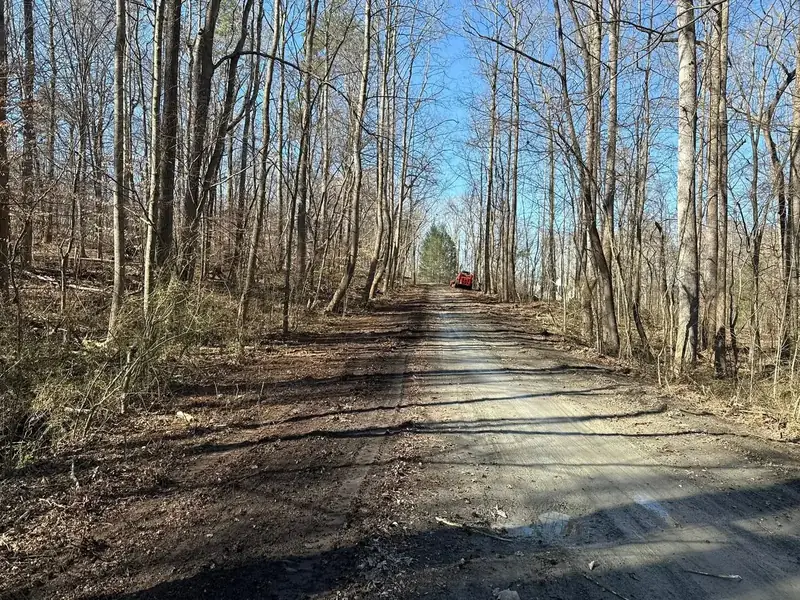
How commercial clearing works on Piedmont ground
Nearly every commercial clearing job in North Carolina disturbs more than an acre, which means the state's sediment and erosion control rules apply and the county or the City of Greensboro has to approve a plan before dirt moves. That plan dictates where the silt fence goes, where the construction entrance is, what gets cleared first, and sometimes what stays as a vegetated buffer. We don't write those plans — the civil engineer does — but we work to them, and we know what an inspector looks for on the first visit. Stream buffers, wetland flags and tree-save areas on the drawing are hard lines for us.
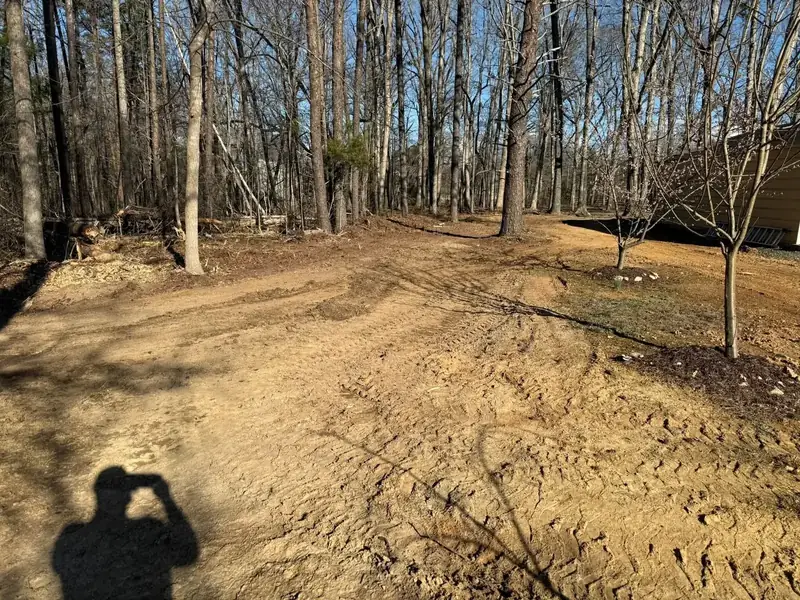
Within those limits, commercial clearing is about getting the site to a condition the grading contractor or the GC can take over without rework. On most sites that means a full clear inside the disturbance line: mulch everything the head will take, fell and grapple the larger timber, pull stumps and root rake the building and pavement footprints so there's nothing organic under the pad. Debris handling is usually haul-off or on-site grinding on commercial work — burn piles rarely fly inside city limits — and we scope it that way from the start.
The Piedmont adds its own issues. Red clay on a commercial site that's been scraped bare will wash in the first storm, so we keep the mulch layer on any slope that isn't immediately being graded and stage the clearing so bare ground isn't sitting exposed for weeks. Outparcels along highways often have DOT right-of-way and sight-distance requirements at the entrance. And sites that back up to a creek — common around Greensboro, High Point and Burlington — carry buffer rules that reach well past the water. We'll flag all of that in the walk-through and work it into the scope.
What the job looks like
Plan review and site walk
We go through the site plan, erosion control plan and any survey with you or the GC, then walk the site to match the drawing to the ground. Buffers, tree-save areas and the disturbance limit get flagged.
Scope and schedule
A written estimate that lays out the phases, how debris is handled, what's stumped and raked versus mulched, and the dates. We coordinate with the GC's schedule and the erosion control inspection.
Erosion control first
Silt fence, construction entrance and any required diversions go in before clearing starts, per the approved plan. We can install those measures or work around another contractor's.
Clear, stump and rake
Mulching through the brush and small timber, felling and grappling the larger trees, then stumps pulled and the footprint root raked. Debris is ground on site or hauled on the dump trailer as scoped.
Rough grade and handoff
The cleared site gets a rough grade with the blade so the civil contractor isn't fighting humps and holes, and we walk it with the GC or owner before demobilizing.
Best fit for
- Highway outparcels and small retail pads
- Church, daycare and nonprofit building sites
- Contractor shops, equipment yards and small warehouses
- Self-storage, car wash and drive-through sites
- Small subdivision entrances and model-home lots
- Agricultural buildings and commercial greenhouses
- Clearing phase ahead of a civil or grading contractor
What drives the price
We don't quote commercial clearing from a chart. These are the things that move the number, and we'll walk through each one with you on site:
- Acreage inside the disturbance limit and timber density
- Tree size and the share of timber that needs felling rather than mulching
- Stump removal and root raking extent — full footprint or pad only
- Debris handling: on-site grinding, haul-off or a combination
- Erosion control measures we install versus those by others
- Buffers, tree-save areas and wet ground that slow the work
- Schedule — a tight window with the GC waiting prices differently than a flexible one
Equipment we bring
- Compact track loader with a high-flow forestry mulching head
- Grapple for felled timber and debris loading
- Mini excavator with thumb for stumps, roots and silt fence trenching
- Root rake and stump bucket for clean footprints
- Grading blade, box blade and dozer blade for rough grade
- Dump trailer for haul-off and construction entrance stone
Commercial Clearing questions
How much does commercial land clearing cost per acre in NC?
Commercial sites price higher per acre than residential because the finish standard is higher — full stump removal and raked footprints, haul-off instead of mulch left in place, and erosion control to a plan. Density and timber size still drive the number more than acreage. We walk the site with the plan in hand and give a written estimate the GC can put in the budget.
Do I need an erosion control permit for commercial clearing?
If the site disturbs more than an acre, yes — North Carolina requires an approved sediment and erosion control plan before land-disturbing activity starts, and Greensboro and several Triad counties run their own programs. Your civil engineer prepares the plan; we work to it and make sure the measures are in before we clear.
Can you work with our general contractor's schedule?
That's how most commercial jobs go. We coordinate start dates with the GC, phase the clearing so the grading contractor can follow, and show up when we say. If the schedule moves because of weather or an inspection, we communicate it instead of going quiet.
Do you handle the debris on a commercial site?
Yes. Most commercial sites can't burn, so debris is either mulched in place on areas that aren't being graded, ground into chips that get used on site, or loaded and hauled. The estimate spells out which, and we price it so there's no surprise dump bill at the end.
Can you clear a site that backs up to a creek?
Yes, with the buffer respected. Stream buffers around the Triad can reach fifty feet or more from the bank depending on the jurisdiction, and the site plan should show it. We flag it on the ground, leave it vegetated, and work from the top down so nothing moves toward the water.
How big a commercial site can you handle?
Our sweet spot is sites from under an acre up to several acres — outparcels, church sites, shop lots, small subdivisions. Larger tracts we can still clear, but the schedule gets longer and at some point a bigger sitework outfit makes more sense. We'll be honest about which side of that line your project falls on.