
Every rural property in the Piedmont seems to come with at least one building that's past saving — a tobacco barn with the roof caved in, a shed the previous owner filled with junk and let rot, a carport leaning on its last post, a chicken house, an old block well house, a mobile home frame somebody walked away from. Small demolition is taking those down, sorting and hauling what comes out, pulling the slab or the piers if you want them gone, and leaving a piece of ground you can mow, build on or grade.
We do this work with a compact track loader and a grapple, a mini excavator with a thumb, and a dump trailer. That's the right scale for outbuildings and small structures: enough machine to pull a barn down and load the pieces, small enough to get through a gate and work between trees. We don't take on houses, commercial buildings or anything with a basement, and we don't handle asbestos abatement — if an old building has asbestos siding or floor tile, that gets tested and removed by a licensed abatement contractor before we touch it.
Clark runs the machine — veteran, working firefighter, owner. He's spent enough time around collapsed structures professionally to know how they come apart and how to do it without hurting anybody or anything nearby. Free estimates across the Triad and roughly an hour and twenty minutes from Greensboro.
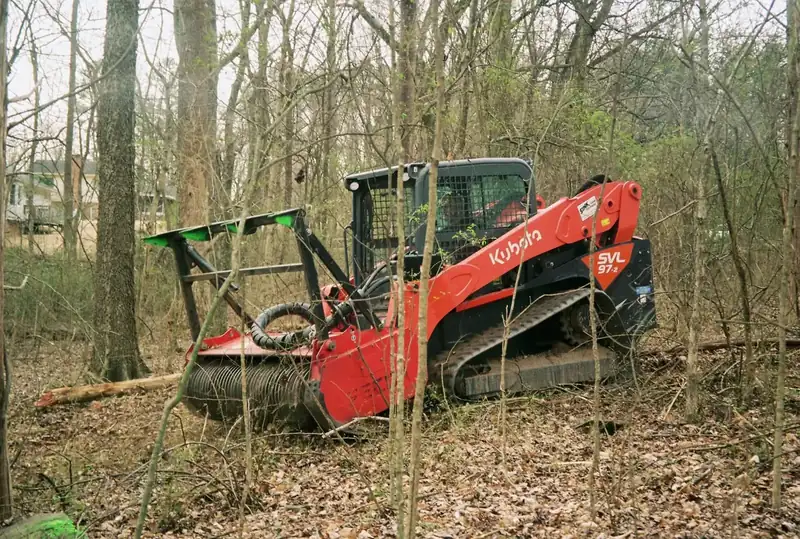
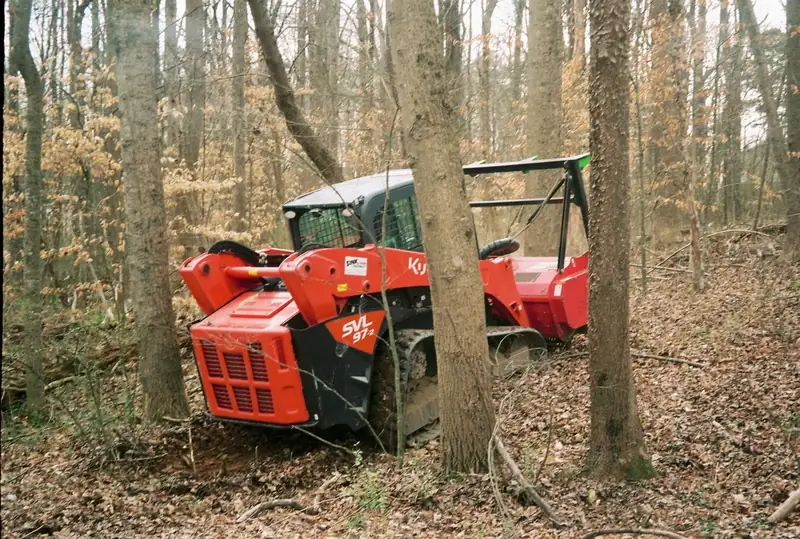
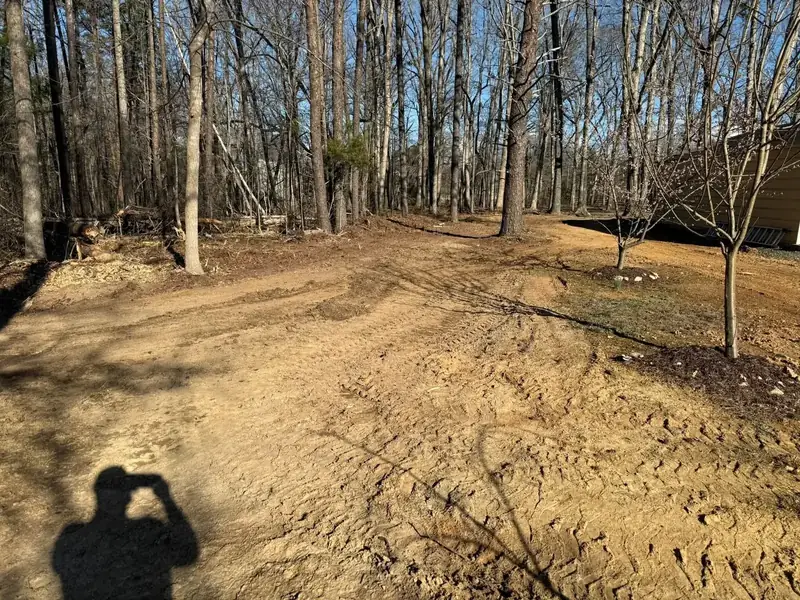
How small demolition works on Piedmont ground
A small demolition job starts with a look at what the building is made of and what's in it. Wood-frame sheds and barns come down fast and load easy. Block and brick structures take the excavator and produce heavy debris. Metal buildings get unbolted or cut and the steel is often worth hauling to a scrap yard separately. Anything built before the 1980s might have asbestos in the siding, roofing or floor tile, and anything with old electrical service needs the power confirmed dead before the first pull. We also check for the things people forget — a buried fuel tank beside the shed, a well under the well house, a septic tank behind the old home site.
Then the building comes down. Usually that means the excavator pulls the roof and walls in on themselves, the grapple sorts the pile — wood, metal, block, junk — and the track loader loads the trailer. Clean wood can be piled for you to burn if you want to handle the permit; metal goes to scrap; block, brick and concrete get hauled to a fill site or crushed and reused on site as driveway base if you have a use for it; everything else goes to the landfill. Slabs and footings get broken up and removed with the excavator or left in place if you'd rather, and piers and posts get pulled.
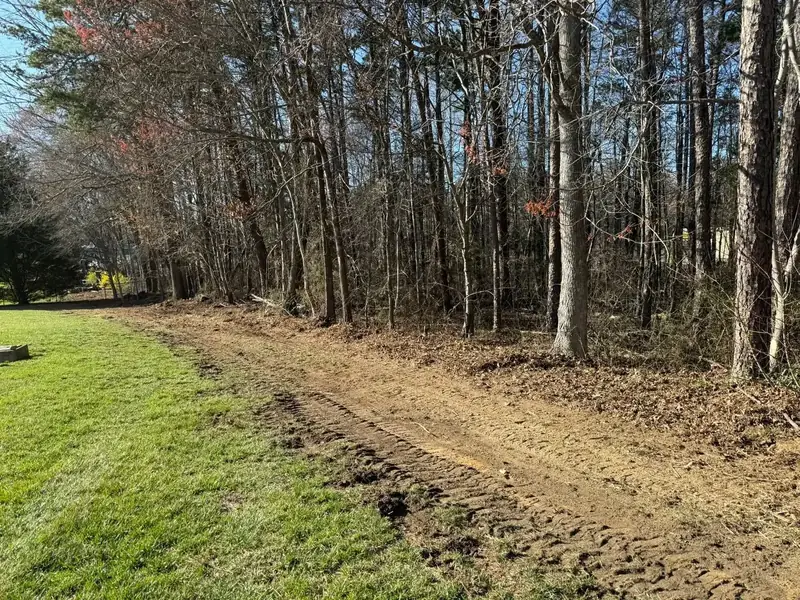
The finish depends on what's next for the spot. If you're building there, we grade the footprint and compact the fill where the slab or the piers came out so the new pad doesn't settle. If it's going back to lawn or pasture, we backfill, spread topsoil and leave it ready for seed. On mobile home removals we pull the piers, fill the holes, cut and haul the frame, and grade the pad out so the site can be reused or returned to yard. The goal is that six months later nobody can tell there was a building there.
What the job looks like
Look at the structure
We walk it with you, check what it's built of, look for asbestos-era materials, confirm utilities are disconnected, and find out what's underneath or around it that we need to know about.
Estimate
A written scope: what comes down, how debris is sorted and where it goes, whether the slab or piers come out, and how the ground is left. Haul-off priced by the load.
Take it down
Excavator pulls the structure in on itself, grapple sorts the pile by material, track loader loads the trailer. Clean wood piled if you're burning it; metal separated for scrap.
Remove the base and clean up
Slab, footings, piers or posts broken out and hauled if that's the scope. The footprint backfilled, compacted and graded for whatever comes next.
Best fit for
- Collapsed or rotten barns, sheds and outbuildings
- Old tobacco barns and pack houses past saving
- Carports, lean-tos and pole sheds
- Abandoned mobile home frames and pads
- Block well houses, pump houses and small garages
- Chicken houses and small livestock structures
- Clearing a building footprint for a new shop or pad
What drives the price
We don't quote small demolition from a chart. These are the things that move the number, and we'll walk through each one with you on site:
- Size and construction of the building — wood, block, metal, mixed
- Volume of debris and how many trailer loads it takes
- Landfill and disposal fees for the material type
- Whether the slab, footings or piers are removed
- Contents left inside that have to be sorted and hauled
- Access for equipment and the trailer
- Grading and topsoil to finish the footprint
Equipment we bring
- Mini excavator with thumb for pulling and breaking
- Compact track loader with grapple for sorting and loading
- Bucket and box blade for backfill and grading the footprint
- Dump trailer for haul-off to landfill, scrap or fill site
Small Demolition questions
How much does it cost to tear down a shed or barn?
The building itself usually comes down in a few hours. The cost is mostly in the hauling and disposal — how many trailer loads, what the landfill charges for the material, and whether a slab has to be broken out and hauled too. A wood shed with a dirt floor is the cheap end. A block building with a thick slab, full of junk, is the expensive end. We look at it and give a written price with the haul-off spelled out.
Do I need a permit to demolish a shed or barn in NC?
Many counties require a demolition permit for any structure, even outbuildings, and it's usually simple to get through the county inspections office. Utilities have to be disconnected and documented. If the building is old enough to possibly contain asbestos, the state requires a survey before demolition. We'll tell you what applies in your county before we start.
What about asbestos in old buildings?
Buildings from before the mid-1980s can have asbestos in siding, roofing, floor tile or pipe wrap. If your structure is that age, it needs an asbestos survey, and if any is found, a licensed abatement contractor removes it before we demolish. We don't do abatement, and we won't tear into a building that hasn't been checked.
Can you leave the wood for me to burn?
Yes, if it's clean untreated lumber and you're handling the burn permit. We'll pile it where you want it. Treated lumber, painted wood, shingles and anything with nails that would be a problem in a burn pile get hauled off instead.
Will you remove the concrete slab?
If you want it gone, yes. The excavator breaks it up and we haul it to a fill site or crush and reuse it as driveway base if you have a place for it. If you're building something new on the same spot, the old slab usually has to come out so the new pad can be compacted properly. If it's going back to grass, some people leave it and cover it; we'll talk through the options.
How far from Greensboro do you do demolition?
About an hour and twenty minutes in any direction — the Triad, up to the Virginia line, out to Mount Airy and Elkin, down to Salisbury, Albemarle and Sanford, and east to Durham, Chapel Hill and Raleigh. Haul-off distance to the nearest landfill factors into the price on the outer edges.